

Weekly vs. Biweekly House Cleaning: Which Schedule Is Right for You?

Updated: Sep 9
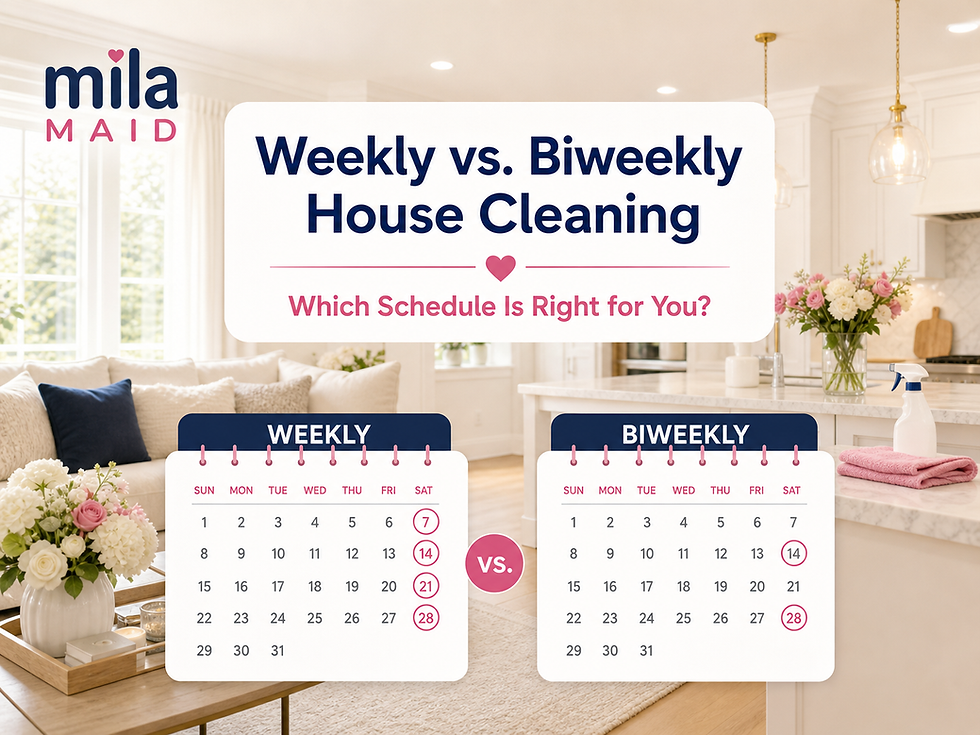
Choosing between weekly vs biweekly house cleaning is less about finding the “best” schedule and more about matching professional help to the way your household actually lives. A weekly visit may be the right fit for a busy home with children, pets, frequent cooking, home offices, or regular guests. A biweekly visit may be enough for a smaller or lower-traffic home where the household can handle light maintenance between appointments.
The most useful question is not, “How often do other people hire a cleaner?” It is, “How quickly does our home stop feeling comfortably clean?” Your answer depends on how many people use the space, how much time everyone spends at home, which rooms get the heaviest use, how much cleaning you want to do yourself, and what level of consistency matters to you.
This guide explains the practical differences between weekly and biweekly service, the household factors that should influence the decision, what each schedule may require between visits, and how Central Indiana homeowners can test a schedule without feeling locked into the wrong choice.
The Quick Answer
Weekly cleaning is usually better for higher-traffic homes, families with children or pets, frequent cooking, or households that want very little maintenance between visits. Biweekly cleaning often works well for lower-traffic homes where the household can handle light upkeep during the second week. The better schedule is the one that keeps the home comfortable without requiring a major catch-up clean before the next appointment.
Biweekly house cleaning is often a practical middle ground for households with moderate traffic. It can provide a dependable reset every other week while leaving the homeowner responsible for basic kitchen, bathroom, floor, and clutter maintenance between professional visits.
Neither schedule removes every household task. Even with weekly service, people still need to manage spills, dishes, laundry, trash, clutter, and urgent messes. The difference is the amount of buildup that occurs before the cleaner returns and the amount of personal maintenance needed to keep the home comfortable.
A good starting rule is simple:
Choose weekly service when the home feels noticeably behind before seven days have passed.
Choose biweekly service when the home stays manageable for approximately ten to fourteen days with light upkeep.
Choose a temporary weekly schedule when the household is going through an unusually demanding period, then reassess later.
The right plan should reduce stress without creating a schedule that feels excessive for your home or uncomfortable for your budget.
What Weekly House Cleaning Usually Means
Weekly house cleaning creates a shorter maintenance cycle. The cleaner returns before normal dust, bathroom residue, kitchen grease, floor debris, and pet hair have had as much time to accumulate. Because the home is being maintained more frequently, each visit can focus on restoring the same general standard rather than recovering from two or more weeks of use.
This schedule is especially useful for high-use rooms. Kitchens can look clean in the morning and show signs of use again by dinner. Bathrooms collect water spots, hair, toothpaste residue, and fingerprints quickly. Entryways and living rooms can accumulate outdoor dirt, crumbs, and pet hair within days. Weekly service helps prevent these areas from reaching the point where the household feels it must complete a major cleanup before it can relax.
A weekly schedule can also make routines more predictable. Homeowners know that a professional visit is always close. That can reduce the temptation to postpone every non-urgent cleaning task until the home feels overwhelming.
Weekly service does not necessarily mean every possible detail is completed every week. The exact scope depends on the cleaning company, the home, and the agreed service plan. Routine appointments commonly emphasize frequently used surfaces, bathrooms, kitchens, floors, dusting, and general presentation. Less frequent detail work may need to be rotated, requested separately, or handled through a deeper service.
Before choosing weekly cleaning, ask what is included during a recurring visit, whether certain tasks rotate, what the company expects the homeowner to prepare, and whether the first appointment has a different scope from later maintenance visits.
What Biweekly House Cleaning Usually Means
Biweekly house cleaning generally means a professional visit every two weeks. It is popular because it provides recurring help without the commitment of a weekly appointment. For many households, fourteen days is short enough to prevent the home from becoming seriously neglected but long enough to keep the total number of annual visits lower.
The tradeoff is that more cleaning happens between appointments. Kitchen counters and sinks still need regular attention. Toilets, bathroom surfaces, and mirrors may need a quick wipe. High-traffic floors may require sweeping or vacuuming. Pet hair may need to be managed. Clutter must still be put away so surfaces and floors remain usable.
Biweekly service works best when the household is willing and able to complete this maintenance. It is less effective when everyone assumes the next professional visit will solve every mess created during the full two-week period. In that situation, the home may feel clean immediately after service, acceptable for several days, and increasingly uncomfortable during the second week.
The condition of the home at the end of the two-week cycle is the most important test. If the home remains manageable and only needs a routine reset, biweekly service may be a good fit. If the second week consistently includes emergency cleaning, arguments about chores, avoidance of certain rooms, or embarrassment about unexpected visitors, the schedule may be too far apart.
Biweekly service is not a lesser version of weekly service. It is a different division of responsibility between the cleaning company and the household.
Weekly vs. Biweekly House Cleaning at a Glance
Weekly service offers more consistency. It usually requires less homeowner cleaning between visits, limits the amount of buildup, and can be easier for busy or high-traffic households. It also involves more appointments throughout the year and therefore a larger total annual cleaning commitment.
Biweekly service offers fewer appointments and may fit moderate-traffic homes well. It can be a strong balance between professional support and household maintenance. However, it requires the occupants to manage basic cleaning during the second week and may allow more dust, hair, bathroom residue, and floor debris to accumulate.
Weekly service may be the better fit when:
The household includes several people.
Children use the home throughout the day.
Pets shed, track dirt, or create frequent messes.
One or more adults work from home.
The kitchen is used for most meals.
Bathrooms receive heavy daily use.
The household hosts visitors regularly.
The homeowner wants very little maintenance cleaning between visits.
Biweekly service may be the better fit when:
The home has one or two occupants.
The occupants spend much of the day away from home.
There are no pets or only low-shedding pets.
The household completes small cleaning tasks consistently.
The kitchen and bathrooms stay manageable between visits.
The homeowner is comfortable vacuuming, wiping, and tidying as needed.
The main goal is a dependable reset rather than near-constant professional maintenance.
These are starting points, not rigid rules. A one-person home with multiple pets may need weekly service. A family may function well with biweekly service because everyone contributes to daily upkeep. The condition and use of the home matter more than the household label.
Factor 1: How Many People Live in the Home?
More occupants usually create more repeated use of the same surfaces. Every person adds shoes near the entrance, dishes in the kitchen, towels in the bathroom, fingerprints on doors, and activity on floors and furniture. The effect is not always linear because shared rooms receive concentrated use.
A two-bathroom home occupied by one person may stay comfortable for two weeks with minor upkeep. The same home occupied by four people may show visible bathroom and floor buildup within several days. A larger home does not automatically need more frequent service than a smaller one, but a heavily occupied home often does.
Consider not only the number of residents but also their routines. Adults who leave early and return in the evening may create less daytime activity than people who work from home. A household with alternating work schedules may have someone using the kitchen and common areas throughout the day. Multigenerational homes may have different cleaning needs in different areas.
Weekly cleaning is often worth considering when shared spaces are continuously active and no one has reliable time to maintain them. Biweekly service can still work when chores are clearly divided and completed between visits.
Ask your household these questions:
How many people use the kitchen every day?
How many bathrooms are used regularly?
How often are common areas occupied?
Does anyone have time for mid-cycle vacuuming and bathroom cleaning?
Are chores completed consistently or only when the home becomes uncomfortable?
The answers reveal more than the number of bedrooms or total square footage.
Factor 2: Children and the Pace of Daily Mess
Children can change the cleaning cycle because they create frequent, small messes across multiple rooms. Crumbs travel from the kitchen to the living room. Toys, school materials, art supplies, shoes, and clothing collect on floors and surfaces. Bathroom sinks and mirrors may need attention more often. Outdoor play can bring dirt into entryways and hallways.
For households where packed schedules make upkeep harder to manage, Mila Maid’s realistic cleaning schedule for busy families can help organize the tasks that still need attention between professional visits.
Weekly service may be especially helpful during periods when the household schedule is already full. School mornings, homework, activities, meals, and bedtime routines can leave little energy for floor and bathroom maintenance. A weekly visit creates a recurring reset before the next week becomes equally busy.
Biweekly service may work when children are older, participate in age-appropriate chores, and the family has a reliable daily reset routine. The professional appointment can then handle the broader cleaning while the household keeps clutter and obvious messes under control.
It is important to separate cleaning from organizing. A cleaning professional can usually work more efficiently when toys, papers, clothing, and personal items are put away. If a large portion of each appointment is spent moving belongings, less time may be available for surfaces, bathrooms, kitchens, and floors.
Before selecting a frequency, observe one ordinary week. Notice when the home first begins to feel behind. If that happens by the middle of the week, weekly cleaning may provide meaningful relief. If the home remains functional and presentable through the first week and only needs light attention during the second, biweekly service may be enough.
Factor 3: Pets, Shedding, and Tracked-In Dirt
Pets can be one of the strongest reasons to choose weekly service. Dogs may track moisture, soil, grass, or road residue through entrances. Cats can distribute litter near boxes and surrounding rooms. Both can leave hair on floors, furniture, baseboards, and fabric surfaces. Food and water areas may need frequent attention.
The type and number of pets matter, but so do the home’s floors and layout. Pet hair may be more visible on hard floors, while carpets and upholstery can hold it until vacuuming. A fenced yard used several times a day can increase tracked-in debris. Rainy and muddy Central Indiana seasons can make entryways difficult to maintain.
Weekly professional cleaning can reduce the amount of hair and debris that accumulates, but it does not replace daily pet-area care. Owners still need to address accidents promptly, maintain litter boxes, wipe muddy paws, wash food and water dishes, and manage excessive shedding between visits.
Biweekly cleaning may work for a home with one low-shedding pet, limited carpet, and regular owner vacuuming. It may be frustrating for a home with multiple shedding pets when no one wants to vacuum during the second week.
A useful test is to look at the floors, furniture edges, stairs, and baseboards on days seven, ten, and fourteen after a cleaning. If pet hair becomes the dominant visible issue by day seven, weekly service may be the better schedule.
Factor 4: Working From Home
A home office increases the number of hours someone spends in the house and often increases the use of the kitchen, bathroom, entryway, and living areas. More meals and snacks may be prepared at home. Packages arrive. Coffee cups and papers collect. Floors receive more daily traffic.
Working from home can also make the condition of the space feel more important. When the home is both a residence and workplace, visual clutter and dirty surfaces may be harder to ignore. Some people can work comfortably in an imperfect environment. Others find that a cleaner space helps them focus and transition between work and personal time.
Weekly cleaning may provide a regular reset that protects work hours. Instead of using part of the weekend to catch up on bathrooms and floors, the homeowner can handle small daily tasks and leave the larger maintenance cycle to the scheduled visit.
Biweekly cleaning can still work well for remote workers who maintain a daily kitchen reset, vacuum high-traffic areas, and keep the office organized. The question is whether those tasks actually happen during demanding workweeks.
Also consider appointment timing. A cleaner working in the home during meetings may require planning. Discuss access, preferred rooms, pets, office privacy, and whether you can temporarily work in another area. The best frequency will not feel sustainable if each appointment disrupts the workday.
Factor 5: Cooking Frequency and Kitchen Use
The kitchen often determines how quickly a home feels dirty. A household that cooks most meals at home produces more crumbs, splatters, grease, dishes, food packaging, and floor debris than a household that frequently eats away from home.
Daily kitchen maintenance is necessary under either schedule. Counters that contact food should be addressed regularly. Spills should not wait for the next professional visit. Dishes, trash, and perishable food require immediate attention. Professional recurring cleaning is most effective when it supports these routines rather than replacing them.
Weekly service may be useful when frequent cooking creates visible buildup on appliance exteriors, cabinet fronts, backsplash areas, floors, and surrounding surfaces. The shorter cycle can keep grease and residue from becoming a larger project.
Biweekly service may be sufficient when the household wipes cooking surfaces after meals, sweeps as needed, and keeps the sink and counters clear. In that case, the professional visit becomes a more thorough reset of the room rather than the first time the kitchen has been addressed in two weeks.
Look at your kitchen near the end of the current cleaning cycle. Is the main problem ordinary use that needs a routine cleaning, or has residue accumulated in layers because no one had time to manage it? Repeated layers point toward either more frequent professional service or a stronger household maintenance routine.
Factor 6: Bathrooms and Shared High-Touch Areas
Bathrooms can shift a household from biweekly to weekly service because they show use quickly. Sinks collect toothpaste, soap, hair, and water spots. Mirrors show splashes. Toilets and surrounding floors need regular attention. Shower and tub surfaces can develop residue depending on use, ventilation, water, products, and surface materials.
A lightly used guest bathroom may not need the same frequency as the primary family bathroom. This is why a customized service conversation is more useful than a universal rule. Some households need weekly attention in two bathrooms but can maintain the rest of the home comfortably for two weeks.
High-touch areas outside the bathroom also matter. Door handles, stair rails, appliance handles, light switches, and commonly used tables can show fingerprints and residue. The amount of attention these areas receive during recurring service depends on the agreed scope.
Weekly cleaning may be appropriate when several people share one or two bathrooms, when morning routines create constant use, or when the household strongly values consistently maintained bathroom surfaces.
Biweekly service may be enough when bathrooms are lightly used and the household completes a mid-cycle wipe of the sink, mirror, toilet, and floor.
Always follow manufacturer care instructions for bathroom materials and product labels for cleaning products. Never mix cleaning chemicals. Professional service should complement safe everyday care, not encourage homeowners to delay urgent sanitation or use unsuitable products.
Factor 7: Home Size, Layout, and Floor Type
Square footage matters because a larger home contains more surfaces and floors, but size alone does not determine frequency. A large home with closed guest rooms may receive less daily use than a compact home occupied by a busy family.
Layout affects how dirt moves. Open floor plans connect the kitchen, dining, and living areas, allowing crumbs and pet hair to travel. Stairs can collect hair and debris along edges. Multiple entrances can spread outdoor dirt. Mudrooms can contain mess effectively when they are used consistently.
Floor type also changes what homeowners notice. Hard floors make crumbs, dust, and pet hair visible quickly. Carpet can hide debris but still requires regular vacuuming. Rugs near entrances may capture dirt but need maintenance. Dark, glossy, or highly reflective surfaces can show fingerprints and dust sooner than textured finishes.
Weekly cleaning can help when the most-used areas are visually connected and the household notices buildup quickly. Biweekly cleaning may work when the home has lower-use zones that can be excluded from every visit or handled on a rotating basis.
When requesting a quote, explain which rooms are actively used. Ask whether the service can focus on occupied spaces, how unused rooms are handled, and whether the plan can change when guests arrive or seasons shift.
Factor 8: Your Personal Cleanliness Standard
Two households can use identical homes in similar ways and still prefer different schedules. One family may be comfortable with some dust and pet hair between visits. Another may feel distracted as soon as floors lose their freshly cleaned appearance.
This is not a question of being “clean” or “unclean.” It is a question of the baseline that allows the home to feel restful and functional. Professional service is valuable when it supports that baseline without creating unnecessary expense or unrealistic expectations.
Ask yourself:
Do I want the home to look recently cleaned most of the time?
Am I comfortable completing maintenance tasks between appointments?
Does visible dust or floor debris bother me immediately?
Do I avoid inviting people over when the house is not at its best?
Does cleaning create conflict within the household?
Would a shorter service cycle meaningfully improve my week?
A weekly schedule may be worth it when the emotional benefit of consistency is a major reason for hiring help. A biweekly schedule may be ideal when the main goal is preventing the home from becoming overwhelming while retaining some personal maintenance.
Your preferred standard may also change. A demanding work season, health limitation, new baby, family visit, home renovation, or caregiving responsibility can make weekly service more valuable temporarily. A quieter season may make biweekly service sufficient again.
Signs Weekly House Cleaning Is Probably the Better Fit
Weekly service deserves serious consideration when several of the following statements are true:
The home looks noticeably dirty within four to seven days.
You vacuum more than once a week but still feel behind.
Pet hair is visible soon after cleaning.
The kitchen is used multiple times every day.
Bathrooms receive heavy use.
Children create daily floor and surface messes.
Adults work from home and use the space continuously.
Weekends are being consumed by catch-up cleaning.
Household members argue about cleaning responsibilities.
Unexpected visitors create immediate stress.
You are paying for biweekly service but doing a substantial clean before the next appointment.
The second week of a biweekly cycle consistently feels too long.
Weekly service can be especially effective when the problem is not a lack of knowledge but a lack of available time. Most homeowners know how to wipe a counter or vacuum a floor. The challenge is fitting all necessary tasks into an already crowded schedule.
The goal is not perfection. The goal is to prevent normal household use from repeatedly crossing the point where the home feels unmanageable.
Signs Biweekly House Cleaning Is Probably Enough
Biweekly service may be a strong fit when most of these statements are true:
The home remains comfortable for ten to fourteen days.
One or two people occupy the home.
The household is away for much of the week.
Pets create limited shedding or tracked-in dirt.
Someone can complete a quick bathroom and floor reset between visits.
The kitchen is cleaned after daily use.
Clutter is kept under control.
The main goal is a reliable reset twice a month.
Weekly service would feel unnecessary during quieter weeks.
The household prefers fewer appointments and more privacy.
You are comfortable adjusting the schedule for holidays, guests, or busy seasons.
Biweekly cleaning works best when the household is realistic about the middle of the cycle. Plan a small maintenance session rather than waiting until the cleaner is due. Fifteen to thirty focused minutes can make a meaningful difference when the task is limited to the rooms that show use fastest.
What Homeowners Still Need to Do Between Weekly Visits
Weekly service reduces the interval between appointments, but daily living continues. A simple maintenance routine protects the professional cleaning and prevents urgent messes from becoming harder to address.
Homeowners should still:
Wash dishes or load the dishwasher.
Wipe food spills promptly.
Remove trash as needed.
Manage laundry and personal belongings.
Put away toys, mail, shoes, and clutter.
Address pet accidents immediately.
Maintain litter boxes and pet food areas.
Sweep obvious crumbs or tracked-in dirt.
Follow safe product and surface-care instructions.
Communicate changing priorities before the next appointment.
A five- or ten-minute evening reset can keep common areas functional. The professional visit then focuses on cleaning rather than searching for usable surfaces beneath household items.
What Homeowners Still Need to Do Between Biweekly Visits
Biweekly service generally requires a more deliberate mid-cycle routine. Without it, the second week may feel much different from the first.
A practical mid-cycle plan may include:
Wiping bathroom sinks and mirrors.
Cleaning the toilet as needed.
Sweeping or vacuuming high-traffic floors.
Wiping kitchen counters, the sink, and the cooking area.
Removing fingerprints from obvious high-touch surfaces.
Managing pet hair in favorite resting areas.
Dusting one or two highly visible surfaces.
Changing towels and linens according to household preference.
Completing a clutter reset before the professional appointment.
This maintenance does not need to duplicate the full service. Focus on sanitation, function, and the areas that bother the household most. The cleaner can then complete the broader recurring scope during the scheduled visit.
How Cleaning Frequency Affects Cost and Value
Weekly service involves more appointments each year than biweekly service, so the annual commitment is generally higher. However, price should not be evaluated only as the number of visits multiplied by a generic rate. Cleaning quotes can depend on the home’s size, condition, layout, number of bathrooms, pets, service scope, frequency, access, and requested details.
A more frequent schedule may sometimes make each individual maintenance visit more predictable because less buildup occurs between appointments. That does not mean weekly cleaning will always be cheaper per visit or that every company prices frequency the same way. Ask for a personalized quote and confirm exactly what is included.
Value also includes the work the household no longer performs. Consider:
How many personal hours are spent cleaning each week?
Are evenings or weekends regularly lost to catch-up cleaning?
Does cleaning prevent time with family, rest, exercise, or other priorities?
Does the current routine cause stress or conflict?
Would weekly service replace meaningful labor, or would it simply repeat work the household already enjoys doing?
Biweekly service may offer the best value when it removes the most burdensome tasks and the household can maintain the rest. Weekly service may offer better value when the home’s use level makes the biweekly gap costly in personal time and stress.
Do You Need a Deep Cleaning Before Recurring Service?
Some homes need a more detailed initial reset before recurring maintenance begins. If buildup has accumulated on surfaces, floors, fixtures, edges, or less frequently cleaned areas, a standard recurring appointment may not be designed to address everything at once.
If you are unsure whether the home needs routine maintenance or a more detailed reset before recurring service begins, compare standard cleaning vs. deep cleaning before choosing the starting scope.
An initial deep cleaning can establish a cleaner baseline. Later weekly or biweekly visits can then focus on maintenance. The exact distinction between a deep cleaning and recurring cleaning varies by company, so homeowners should not assume that every task is included.
Ask:
What is included in the first appointment?
Is the first visit priced or scheduled differently?
Which details are included in recurring service?
Are interior appliances, interior windows, baseboards, blinds, or other detailed tasks included, rotated, or optional?
Does the company need photos or a walkthrough to quote accurately?
What preparation is expected before arrival?
A clear first-service plan prevents disappointment. It also makes it easier to judge whether weekly or biweekly maintenance is working because the home begins from an agreed condition.
Not sure which level of service you need? See our guide to Standard Cleaning vs. Deep Cleaning: What Is the Difference? for a clear comparison of standard and deep cleaning.
A Room-by-Room Way to Choose Your Schedule
Instead of evaluating the entire home as one unit, look at the rooms that lose their clean appearance fastest.
Kitchen: Weekly service may be helpful when the household cooks frequently, has children using the room throughout the day, or notices grease and floor debris quickly. Biweekly service can work when surfaces are wiped daily and floors receive a mid-cycle sweep.
Primary bathroom: Weekly service may be useful for shared or heavily used bathrooms. Biweekly may be enough for one or two careful users who complete a quick mid-cycle wipe.
Secondary bathrooms: Low-use bathrooms may need less frequent attention, although toilets, sinks, and floors still require appropriate maintenance.
Living room: Pets, children, eating, and high traffic can support weekly service. A lightly used room may remain comfortable for two weeks.
Bedrooms: Bedrooms often depend more on clutter, linens, dust, and floor use than on household traffic. Some homeowners prioritize them every visit; others focus on common areas.
Entryways and mudrooms: These areas can justify weekly attention during rainy, muddy, or snowy periods.
Home office: A frequently used office may benefit from weekly dusting and floor care, especially when it is visible during video calls or client visits.
For a practical routine between professional visits, see our A Realistic Cleaning Schedule for Busy Families: Daily, Weekly, and Monthly Tasks That Actually Work.
The best schedule may be based on the highest-need rooms rather than the average condition of the whole home.
Seasonal Changes in Central Indiana
Central Indiana homes may not need the same cleaning rhythm all year. Weather, school schedules, holidays, and outdoor activity change how much dirt enters the home and how often rooms are used.
Spring can bring rain, mud, pollen, open windows, and increased outdoor activity. Entryways, floors, and surfaces may need more frequent attention.
Summer can include children at home, sports, pets moving in and out, gatherings, and more frequent use of kitchens and bathrooms.
Fall can increase leaf debris and tracked-in dirt. School and activity schedules may also reduce the time available for cleaning.
Winter can concentrate people indoors. Wet shoes, salt residue, holiday gatherings, cooking, and illness-season routines may make a shorter cleaning cycle more valuable.
A household that prefers biweekly service most of the year might choose weekly visits during a demanding season. A weekly client might temporarily reduce frequency during extended travel. Ask whether the cleaning schedule can be adjusted and how much notice is required.
A Four-Week Trial Method
When the decision is unclear, treat the first month as a test rather than a permanent commitment.
Week 1: Begin from the best available baseline. Take note of the kitchen, bathrooms, floors, pet areas, and entryways after the professional visit.
Days 4–7: Record which areas show visible use first. Notice whether the home still feels comfortable or whether you are already completing substantial cleaning.
Days 8–10: If testing biweekly service, identify the minimum maintenance required. Track how much time it takes and whether the household completes it without stress.
Days 11–14: Evaluate the condition before the next visit. Is the home ready for a routine reset, or has it become a catch-up project?
After the second appointment, repeat the observation. One unusual week should not determine the entire schedule. Look for a pattern.
At the end of four weeks, ask:
How many hours did we spend cleaning between visits?
Which rooms became uncomfortable first?
Did we keep up with the maintenance plan?
Did the home feel presentable when someone stopped by unexpectedly?
Was the professional appointment restoring a baseline or rescuing the home?
Would a weekly visit remove a meaningful burden?
Would biweekly service plus a short mid-cycle routine be enough?
Use the answers to adjust.
Common Mistakes When Choosing a Cleaning Frequency
Copying someone else’s schedule. Another family’s home, pets, standards, and routines are different.
Choosing only by price per visit. The cheaper schedule may require more personal labor than expected.
Assuming recurring cleaning includes every detail. Confirm the exact scope.
Ignoring clutter. Cleaning frequency cannot solve an organization problem by itself.
Waiting for the home to become overwhelming. A maintenance schedule works best before buildup becomes severe.
Selecting biweekly service without planning mid-cycle tasks. Decide who will handle bathrooms, floors, and the kitchen.
Selecting weekly service but leaving surfaces inaccessible. Put away household items so the cleaner can focus on cleaning.
Treating the first appointment as proof of the long-term schedule. The initial condition may require more work than later visits.
Refusing to adjust. Household needs change, and the schedule should be allowed to change with them.
How to Switch From Biweekly to Weekly Service
A schedule change can be straightforward when the company has availability. Contact the provider before the current cycle becomes unmanageable. Explain which areas are building up and why the two-week interval is not working.
Ask whether weekly service changes:
The appointment day or arrival window.
The recurring scope.
The expected visit duration.
The price structure.
The tasks that rotate.
The preparation requirements.
The cleaner or team assigned.
A weekly schedule should be designed around maintenance, not simply inserted as an extra identical appointment without discussion. The provider may recommend a different focus based on the shorter interval.
How to Switch From Weekly to Biweekly Service
Homeowners may reduce frequency because the household is traveling, children leave for school, a pet is no longer in the home, work schedules change, or weekly service feels more frequent than necessary.
Before switching, decide how the household will manage the second week. Identify the three or four tasks most likely to become noticeable. Assign them to specific people and days.
Also ask whether the biweekly scope differs from the weekly scope. More buildup may require different time allocation. Confirm whether the company can preserve the preferred day and whether schedule changes require notice.
Try the new frequency for at least two cycles unless the home becomes clearly unmanageable sooner.
How to Prepare for Either Schedule
Good preparation improves the value of both weekly and biweekly appointments.
Before the visit:
Put away personal items, papers, toys, and clothing.
Clear the floors in rooms being cleaned.
Remove dishes from the sink when possible.
Secure pets according to the agreed plan.
Provide access instructions.
Identify fragile, damaged, or sensitive items.
Communicate priority changes.
Explain any surface-care restrictions.
Confirm which rooms should or should not be entered.
Avoid adding major tasks at the last minute without discussing time and scope.
Homeowners do not need to clean the home before the cleaner arrives. The goal is to make the surfaces and floors accessible so the appointment can focus on the agreed cleaning work.
Questions to Ask Before Booking Recurring House Cleaning
What is included in a normal recurring visit?
What is not included?
Do you offer weekly and biweekly scheduling in my area?
Is the first cleaning different from later appointments?
How is the quote determined?
Can I change frequency later?
How are priority rooms handled?
Are tasks rotated?
What should I do with pets?
What access options are available?
What should be put away before arrival?
How do I communicate a service concern?
What happens when a holiday affects the appointment?
How much notice is required to reschedule?
Can the plan be adjusted when guests, travel, or seasonal needs change?
A reliable service conversation should make the household’s responsibilities and the company’s responsibilities understandable before the first appointment.
Choosing the Right Schedule for Your Household
Weekly house cleaning is often the right choice for households that create visible buildup quickly, have limited time for maintenance, or strongly value a consistently maintained home. Biweekly cleaning is often the right choice for moderate-traffic homes where occupants can complete light cleaning during the second week.
The decision does not need to be permanent. Start with the schedule that best matches the home’s current use, observe the condition between visits, and adjust based on evidence.
Mila Maid serves homeowners in Indianapolis and nearby Central Indiana communities. Review Mila Maid professional house cleaning services, explore house cleaning services in Indianapolis, or learn about house cleaning services in Carmel and Fishers. When you are ready to discuss your home, request a personalized cleaning quote and confirm which recurring frequencies are currently available for your location and service needs.
Frequently Asked Questions
Is weekly house cleaning better than biweekly cleaning?
Weekly cleaning is not automatically better. It is usually more appropriate for high-traffic homes, households with children or pets, frequent cooking, home offices, or homeowners who do not want to perform much maintenance between visits. Biweekly cleaning may be enough for lower-traffic homes with consistent household upkeep.
Is biweekly cleaning really every two weeks?
Biweekly house cleaning generally means one visit every two weeks. Confirm the schedule with the provider because people sometimes use “twice a month” and “every two weeks” as though they are identical. Every-two-week service produces twenty-six visits in a typical year, while twice-monthly scheduling usually produces twenty-four.
What should I clean between biweekly appointments?
Focus on the areas that affect sanitation and daily function: dishes, food spills, kitchen counters, the sink, trash, bathroom surfaces, toilets, high-traffic floors, pet areas, and clutter. A short mid-cycle reset can help the home remain comfortable until the next professional visit.
Can I start with weekly cleaning and change to biweekly later?
Many cleaning arrangements can be adjusted, subject to service-area coverage, appointment availability, notice requirements, and the company’s policies. Starting weekly can be useful when the household is establishing a baseline or moving through a particularly busy period.
Does weekly cleaning eliminate the need for deep cleaning?
Not necessarily. Recurring cleaning and deep cleaning may have different scopes. Weekly maintenance can reduce buildup, but detailed or infrequent tasks may still need a separate service, rotation, or add-on. Confirm exactly what is included.
How do I know if my biweekly schedule is too far apart?
The schedule may be too far apart when the home becomes uncomfortable during the second week, you complete a major clean before every appointment, pet hair or bathroom buildup becomes difficult to manage, or the household experiences repeated stress about chores. Those patterns suggest testing weekly service or strengthening the mid-cycle routine.
Related Resources
Important Disclaimer
This article provides general household-cleaning information and is not medical, environmental, restoration, or hazardous-material advice. Always follow product labels and manufacturer care instructions, never mix cleaning chemicals, and contact an appropriately qualified professional when a condition may involve mold, biohazards, structural damage, or another specialized risk.


Comments